Top 8 essential skills for staying safe in the mountains.
I recently asked folks who follow us on socials for their input on what are the most important skills for keeping you safe in the mountains? There were loads of great suggestions and some obvious common themes.
Here are the responses with some extra info from me added in. Hopefully this is a useful outline of the key things to work on to boost your mountain safety. If you’d like a helping and to grow skills and confidence in these areas join us for a Mountain Skills Course. Monthly dates throughout the autumn.
Navigation
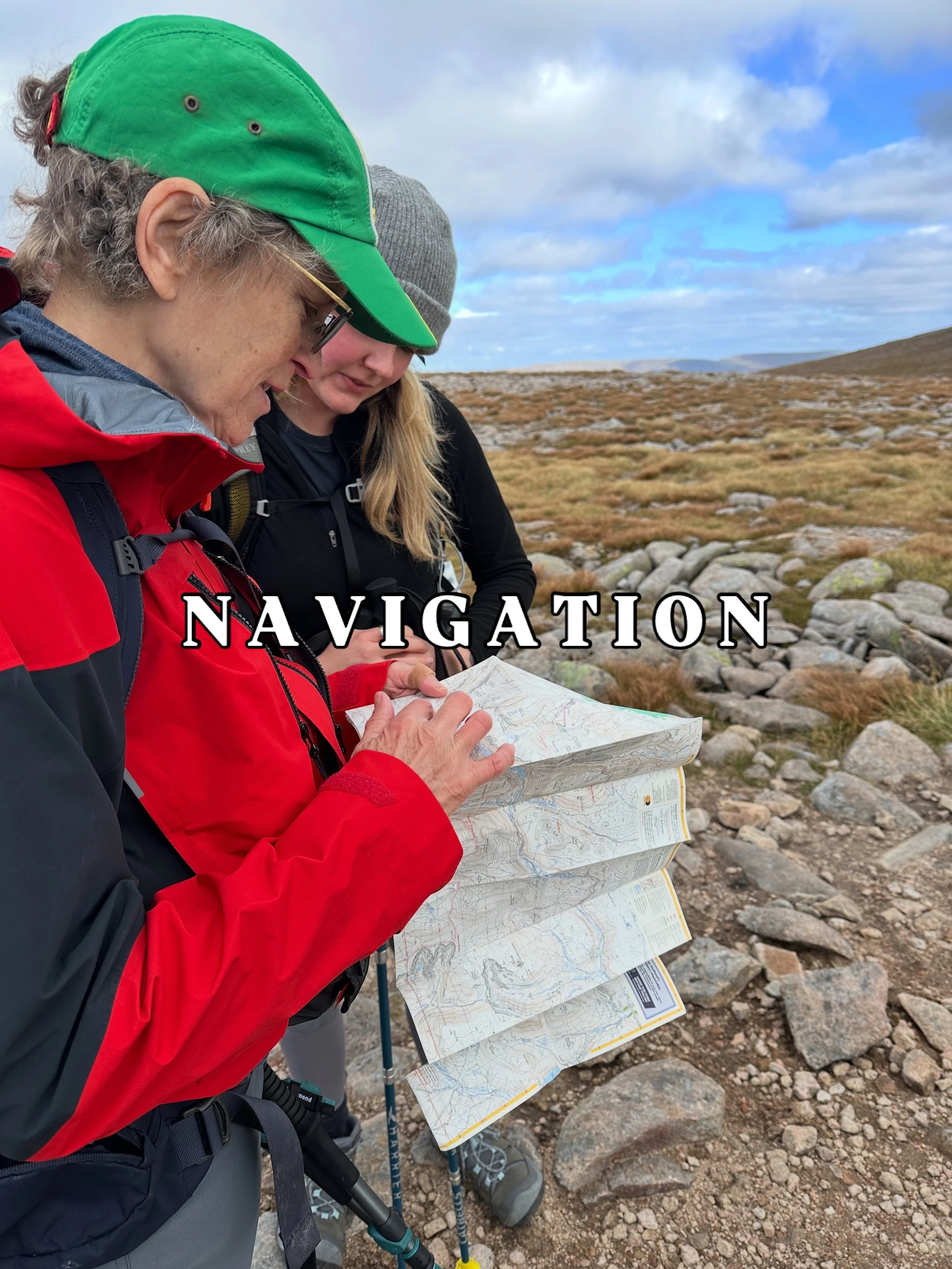
Undoubtedly a key skill when heading into mountain terrain or indeed hiking anywhere. Knowing how to find your way will keep you away from hazards, make sure you are able complete your walk and not be out exposed to the elements for much longer than planned.
There are a variety of tools available to navigate with and all have their merits. Like anything the more you have available to you the more likely something will work!
The ability to read a map is a fundamental skill for many reasons. Used in conjunction with a compass you will be able to find your way in all conditions. But, digital aids like phone mapping and GPS devices are very useful too.
My preference is to use them all in combination. Paper maps are great for planning and seeing the bigger picture. A map and compass is the best way to follow a bearing if needed for moving in poor visibility. Digital navigation is great for a quick check of your precise location to know you are where you think you are!
Route choice and planning
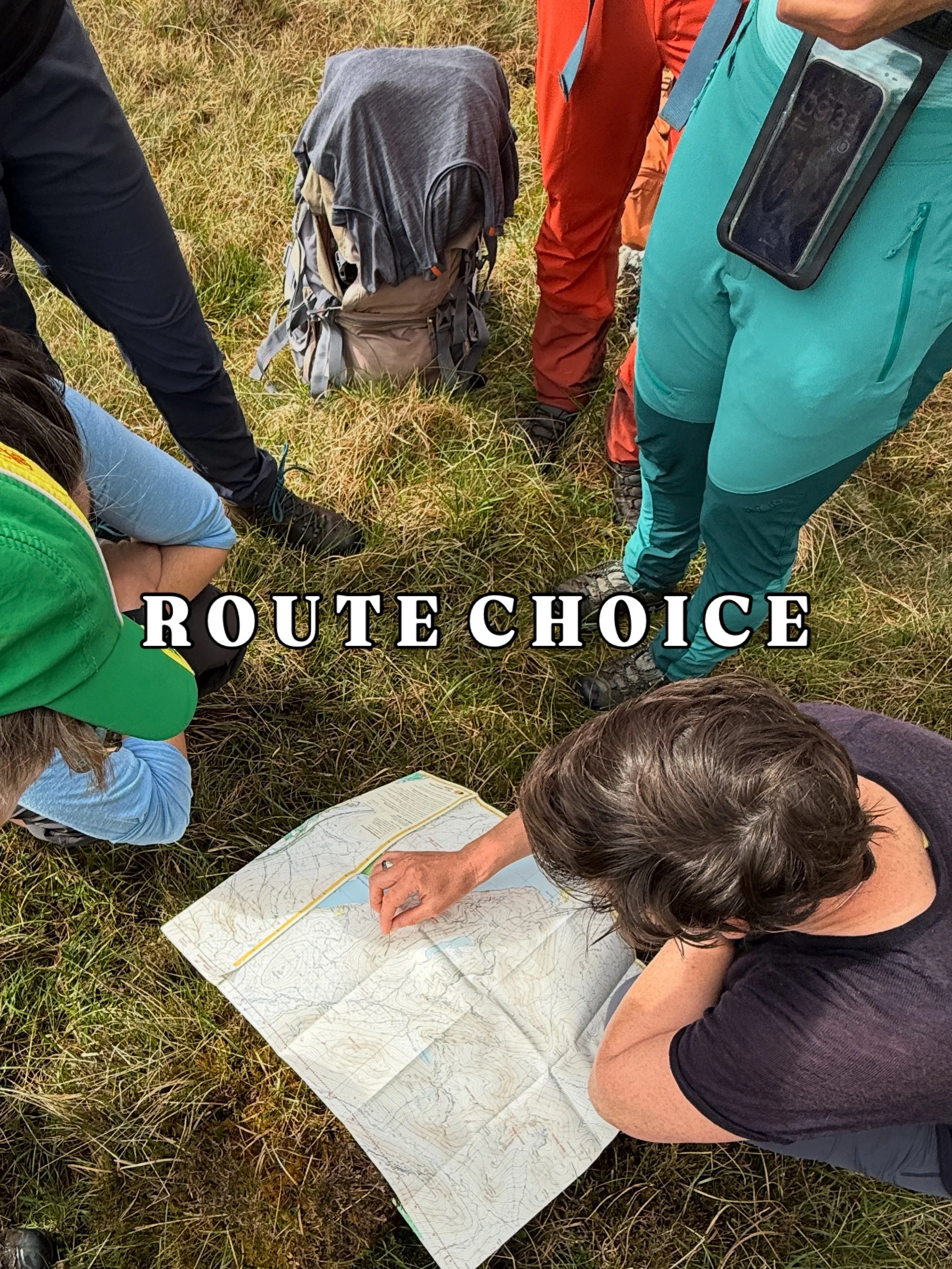
This goes hand in hand with good navigation skills but should start long before you head out.
Familiarise yourself not just with your planned route but with the area around it. Where might you end up if you go wrong? Any hazards to stay clear of? Any escape options of needed?
What will different sections of the route be like? How steep? Underfoot terrain? River crossings? Having all this information in mind already puts you in a strong position to navigate your way and make changes if needed.
I see lots of folk who go wrong because their route planning consisted of ‘following a line on a gps’ with zero understanding of what walking that line in reality entails…! Or what to do when you loose the line!!
Communication
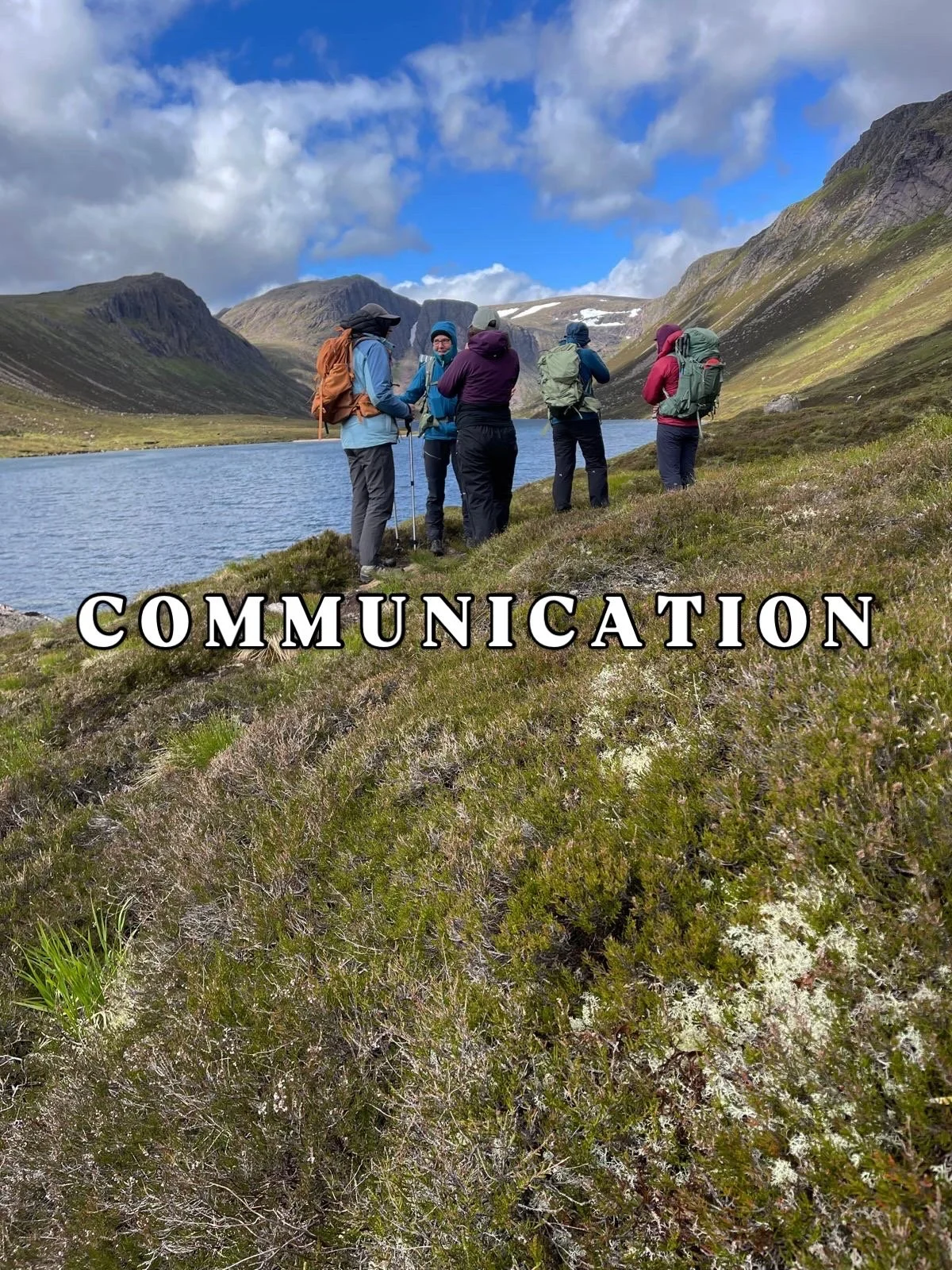
This matters on lots of levels.
If you are out with others then making sure there is good communication within the group is essential. If there is no clear leader it can be easy for everyone to assume that everyone else is paying attention, knows where they are going etc. when in fact no one does!Make sure you agree of a plan together and have a clear idea of who is responsible for what. Check in on each other regularly and ensure everyone is still good to continue.
Whether in a group or solo it is vital that someone ‘at home’ knows your plan and your expected return time. If something has gone wrong this could be the first alarm bell that instigates help coming your way.
If no one knows where you are or what your plan was the chances of help arriving in an emergency are very slim.
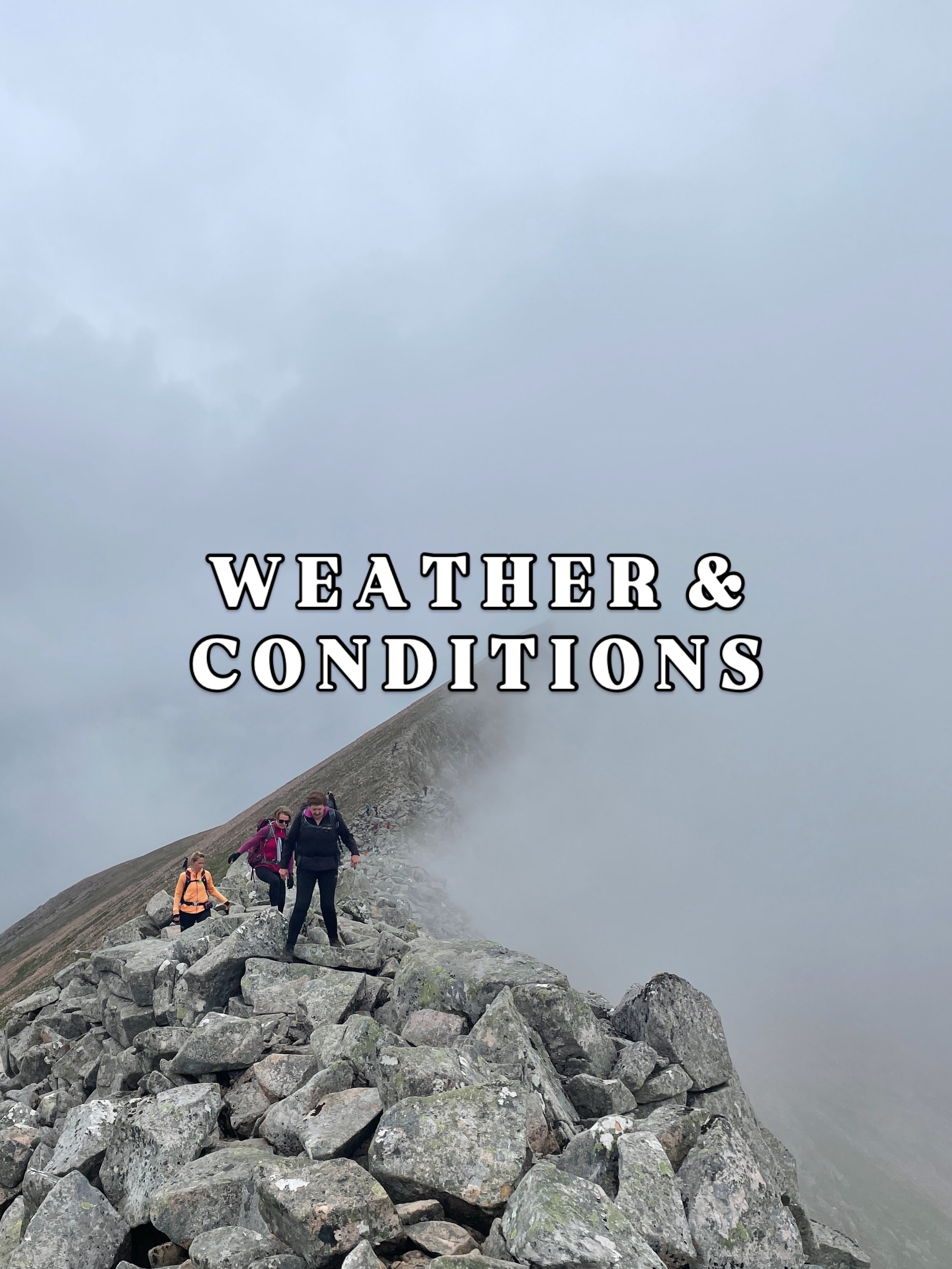
Understanding Weather and Conditions
It goes without saying that this is key whenever you head into the mountains.
Weather has a direct impact on how your day will unfold and what is a sensible route choice. Planning around weather can mean you change your start time to get the best of the weather, have an awareness that you might have to turn back or adapt your route depending on how things turn out, or even abandon your plan altogether.
Using a variety of forecasts in the planning stage helps to build up as accurate a picture as possible. Some knowledge of cloud formations and weather system can help you assess how things are changing while your out.
The long term weather has a big impact on ground conditions so paying attention to forecasts in the run up to any adventures will help you make the best decisions around route choice
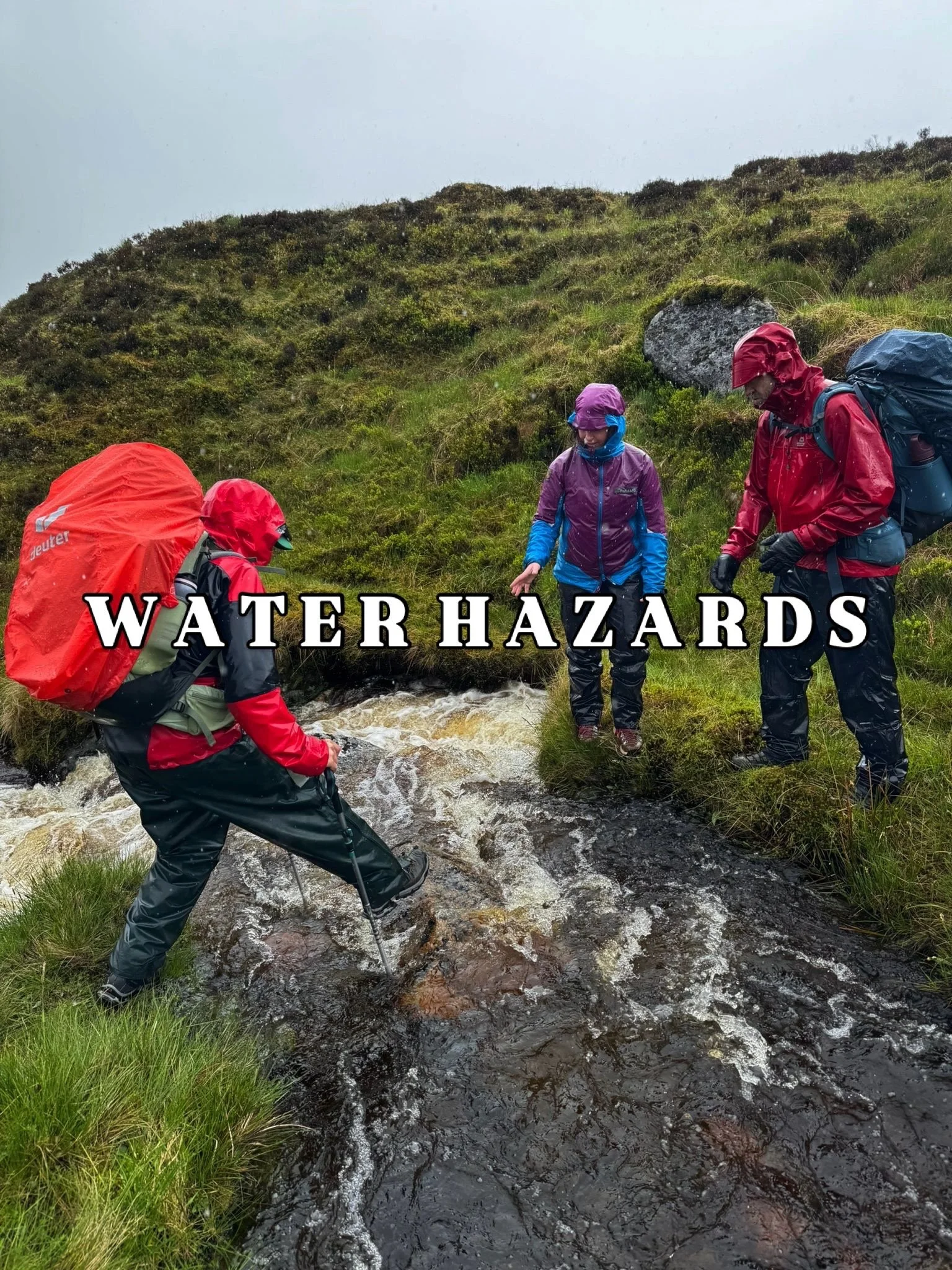
Water Hazards
This is especially important in a UK context as our weather is so changeable and water levels, especially in mountain landscapes can change very fast.
A river that was a gentle trickle can become an impassable torrent in a matter of hours. On the flip side the reverse is also true.
Knowing the different techniques for crossing rivers safely as well as when getting in the water is not a safe option are key. If in any doubt don’t try to cross. Find an alternative route, a bridge or wait it out.
Of course if your route planning and understanding of weather and conditions skills are good then you shouldn’t ever find yourself needing to cross a river in spate!
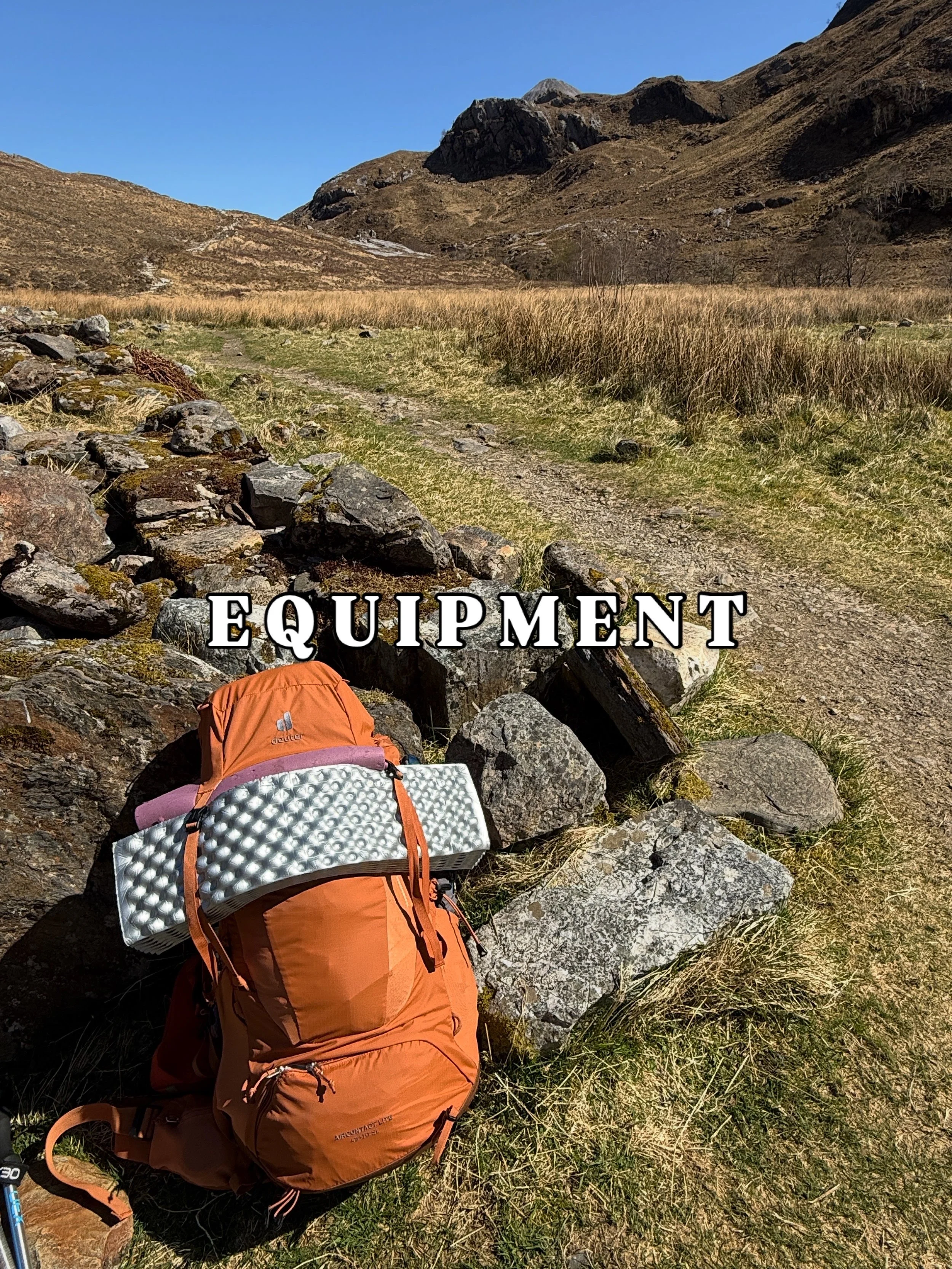
Equipment
Not so much a skill, other than in the selection, but definitely important to hone your kit to make sure you have enough to keep you warm and dry. Especially if things go wrong.
I’ll share another post with exactly what I take in my pack for day hiking but in general for UK conditions you need to always have full waterproofs, warm layers, sturdy footwear, non-cotton clothing, hat, gloves, food, water, emergency shelter.
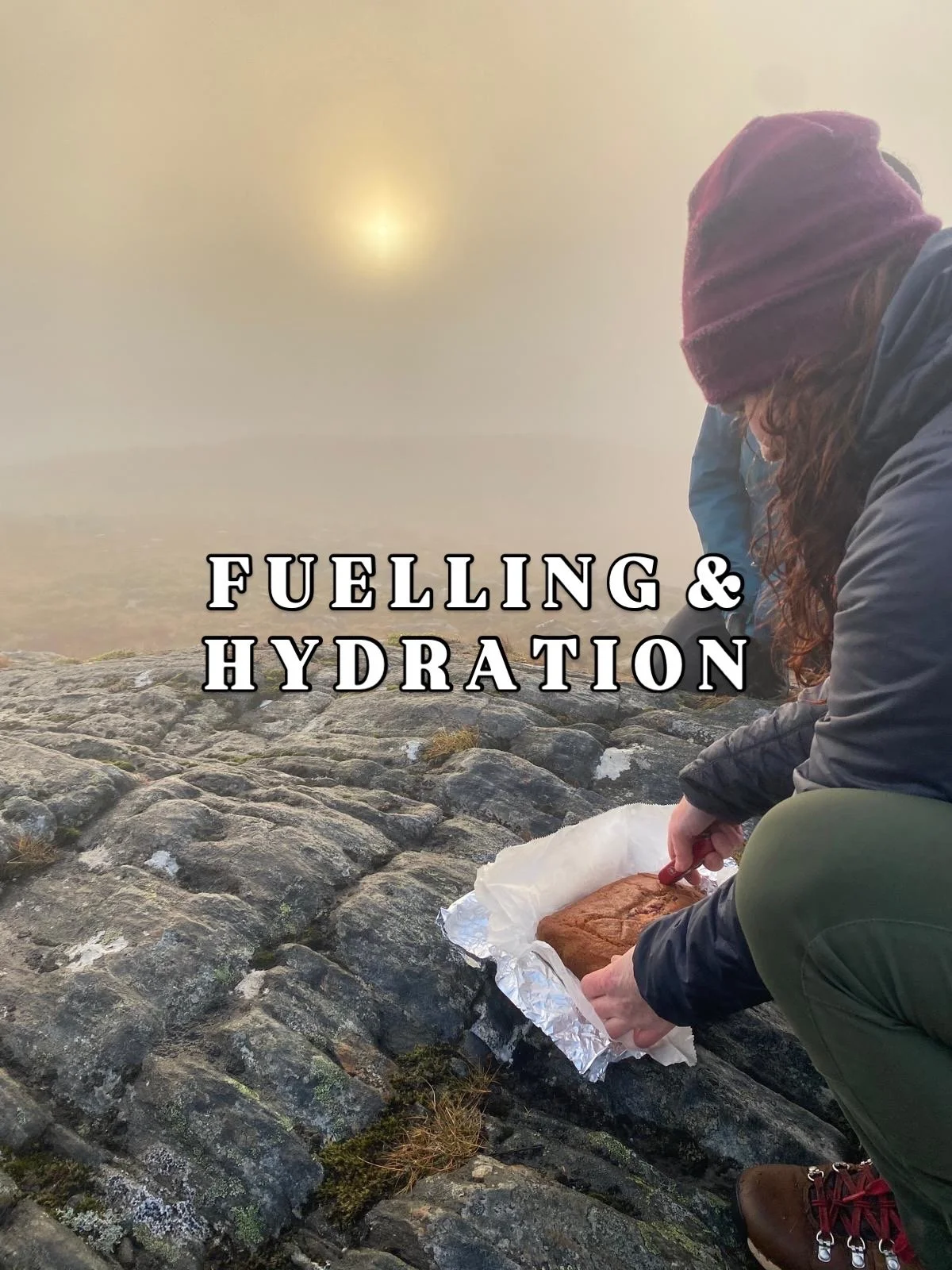
Fuelling & Hydration
A great suggestion from lots of folk and one that is often forgotten. Eating and drinking well and consistently throughout a mountain day is vital to keep you functioning well.
It’s especially hard to do this when the weather is wild as you don’t want to stop and eat but it’s even more essential. If you don’t keep energy levels up then everything else will start to fall apart and become more difficult.
Experiment with lots of different foods and find what works for you. Have snacks in pockets that you can access when walking so you don’t have to stop to eat. Little and often can be a good strategy to keep you on a steady energy level.
Hydration is often top of the agenda when its hot but it’s equally important on cold days too. Make sure your drink of choice suits the conditions - i opt for water with electrolytes when its warm and hot juice on colder days.
Maybe another discussion needed to share snack inspiration! My personal favs are hot cross buns, cheese, nut butter & jam pittas, apples, flapjack… yum!
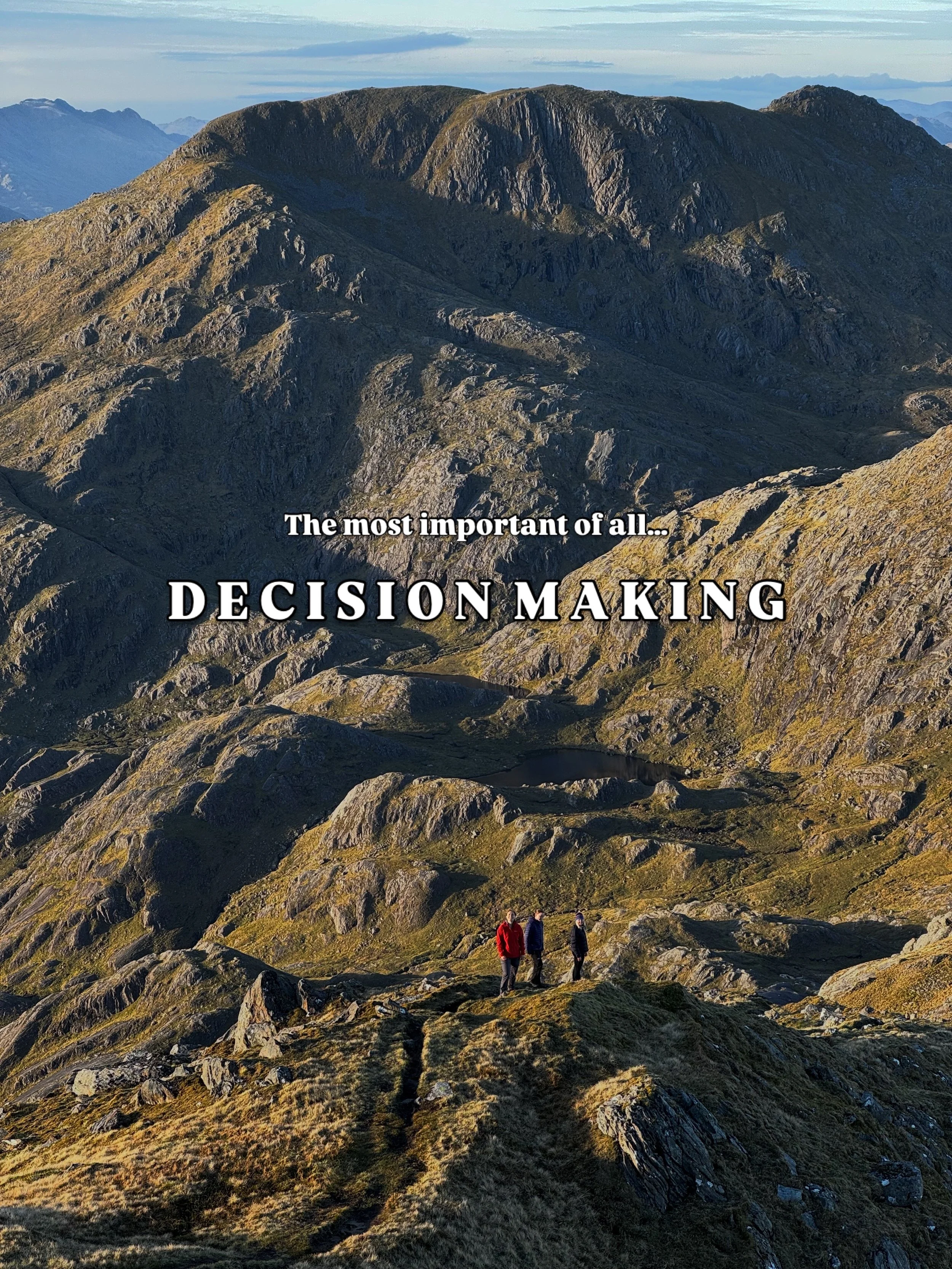
Decision Making
This is the number one most important skill!!No amount of fancy kit, navigation prowess, top notch snacks or technological aids will keep you safe if you don’t have the ability to make good decisions.
Sounds simple doesn’t it? But it is actually incredibly hard. Human nature means a complex myriad of unconscious pressures, biases and expectations all weigh in to make it difficult to really listen to our intuition, our common sense.
Do you know how to listen to your instincts, recognise your biases and make decisions you don’t necessarily want to? How to asses all of your skills and experience in relation to the present moment and know what is right for you in that instant?
It’s never a wrong decision to change plans or turn back. Most likely it’s one you will learn a lot from.